How Diet Culture Stole Our Confidence
I graduated from high school in 2001 and I struggle to remember a time when I was not trying to be skinny and because I was not, believing my body was not good enough.
If you grew up in the 90s and early 2000s you will probably understand exactly what I mean.
This was the era when Jessica Simpson was publicly labelled “Jumbo” for wearing jeans. When Bridget Jones described herself as “fat and alone.” When Nicole Richie was called “the fat one” simply for standing next to Paris Hilton. These women were not large, but the message was clear: anything other than ultra thin was unacceptable.
We absorbed that message quietly and repeatedly without even realizing it.
Diet culture is not just about dieting. It is a belief system that equates thinness with health, morality and worth. It labels food as good or bad, treats body weight as a simple measure of discipline while ignoring genetics, hormones, stress, trauma, medication and aging. It reduces health to appearance and oversimplifies something that is far more complex.
Although women have been hit hardest, men have not escaped it. The lean and muscular ideal has shaped male body image for decades. The pressure looks different, but the underlying message is the same. Your body is a problem to fix.
This does damage in two powerful ways. First, it relentlessly promotes one body type as the only acceptable way to exist. When you see that everywhere, in magazines, on television, in doctors’ offices and in everyday conversations, it is almost inevitable that you begin to believe something is wrong with you if you do not match it. For some people that becomes obsessive calorie tracking and constant body checking. For others it spirals into disordered eating or full eating disorders. Nearly 29 million Americans will experience an eating disorder in their lifetime, and they remain among the deadliest psychiatric conditions.
Second, it creates a deep fear of fatness without leaving room for nuance. Carrying excess body fat can have genuine health implications, but so can chronic dieting, under fueling and extreme leanness. Health is not determined by a single number or by how someone looks in a photo. It is influenced by behaviours, muscle mass, metabolic markers, sleep, stress and long term consistency. Reducing it to body size alone is both inaccurate and harmful.
The impact goes far beyond appearance. Studies show that the vast majority of women avoid social events, opportunities and even job interviews because of how they feel about their bodies (I know I certainly did). We are shrinking our lives because of stomach rolls. That is not vanity, that is a serious cultural problem.
The 90s and early 2000s were particularly intense because several things collided at once. The heroin chic era idolized extreme thinness. Kate Moss became the face of a look defined by visible bones and hollow cheeks, and her quote about skinny feeling better than food became aspirational for a generation. Fashion reinforced it with ultra low rise jeans that were only considered acceptable on the thinnest bodies. Tabloids publicly shamed women for not bouncing back after pregnancy fast enough. Thin was not just preferred, it was expected.
At the same time fad diets exploded. Remember Atkins, The Zone, Weight Watchers weigh ins, low fat everything, low carb everything? Dieting became so normal that not being on a diet felt strange and many of us learned to distrust our own hunger and outsource our eating decisions to points, plans and strict rules.
Then there was the science we were given. In 1998 the National Institutes of Health lowered the BMI cut offs so that millions of people were reclassified as overweight overnight without gaining a single pound. BMI itself was never designed to assess individual health, yet it became a medical gatekeeper. Long term research consistently shows that intentional weight loss is difficult to sustain for most people. Many regain the weight within five years, and repeated cycles of weight loss and regain can negatively affect both physical and psychological health. We were told to eat less and move more as if bodies were simple maths equations.
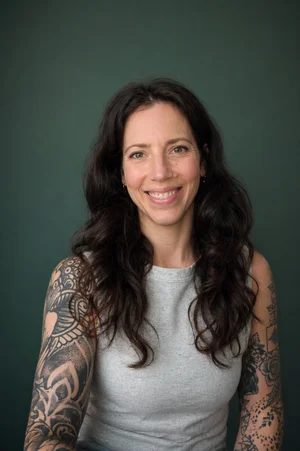
I know this not just from research, but from experience. I struggle to remember a time when I was not obsessed with being skinny and, because I was not, believing my body was not good enough. I was born in the 80s and grew up in the 90s, which was a dangerous time to be a teenage girl. It shaped how I saw myself in ways I am still unpacking.
I tried almost every diet trend you can think of. Low carb, keto, carnivore, plant based, intermittent fasting, extreme low calorie phases, juicing and everything in between. Some of it worked for a while but none of it lasted and all I could focus on was shrinking.
It was only after I became a Certified Personal Trainer and later trained as a nutrition coach in my late thirties and early forties that I truly understood how nutrition and health actually work. For the first time I could separate physiology from marketing. Once I stopped chasing thinness and started focusing on strength, muscle, adequate fuel and long term health, everything changed. I am now stronger, healthier and more comfortable in my own skin than at any other point in my life, including when I was at my lowest weight.
If this makes you feel angry, that makes sense. There is real grief in recognizing how much time, money and mental energy was poured into chasing an ideal that was narrow, unrealistic and constantly shifting.
The shift comes when you stop turning that frustration inward and start directing it at the system that benefited from your self doubt. Question the health headlines instead of absorbing them. Curate your social media so it does not constantly reinforce one narrow ideal. Follow people who promote health, strength, performance and long term wellbeing rather than how small you can make yourself. Unfollow anything that pushes extremes in either direction.
Most importantly, start treating your body like it deserves care. Exercise because it builds strength, resilience and capability, not because you need to erase what you ate. Eat in a way that nourishes you, supports muscle, stabilises energy and promotes long term health. Aim for consistency over perfection.
You do not need to shrink yourself to be worthy and you do not need to swing to the other extreme to be free.
The culture may have sold us a simplified story about health but you get to choose a more intelligent one.